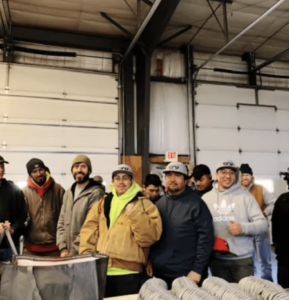
When a crew shows up to a job site wearing safety apparel that’s mismatched, faded, or unbranded, it sends a message, and it’s not the one you want clients seeing. For companies across Wisconsin, Illinois, Minnesota, and Michigan, high-visibility workwear isn’t just a regulatory box to check. It’s a moving billboard, a safety tool, and a team-identity piece all in one. The challenge is getting all three right at the same time.
That’s the balance this post is about: how to brand your team’s safety apparel in a way that builds recognition and pride, without compromising the protective function the gear is there to provide.
Why Safety Apparel Is Doing More Work Than You Think
Safety apparel exists first and foremost to protect workers, which includes high-visibility colors, reflective elements, and durable materials, designed to reduce risk in environments with vehicle traffic, low light, or hazardous equipment. But on a practical level, it’s also often the most-seen piece of branding your company has. Unlike a truck wrap or a sign, safety vests and jackets move through neighborhoods, client sites, and public roads every single day.
That visibility is valuable. A consistent, branded look across your crew signals that your company is organized, professional, and serious about safety which matters to clients evaluating contractors, to municipalities awarding bids, and to new hires deciding where they want to work.
The mistake some companies make is treating branding and compliance as separate decisions made at separate times. Some companies buy the safety gear first, and then slap a logo on later. The better approach is to think about both from the start.
What “OSHA-Compliant” Actually Means for Apparel
A quick but important note: OSHA itself doesn’t certify specific garments. Instead, OSHA requires employers to provide high-visibility apparel that meets recognized industry standards for the hazards present at a given job site, and the specific standard, class, or rating required can vary by industry, task, and even by state or local regulation.
This is the part where we’d rather be straight with you than guess: the exact requirements for your crew depend on factors like proximity to roadways, lighting conditions, and your specific industry (construction, utility work, road crews, and warehouse environments often have different baseline expectations). If you don’t already know which standard applies to your team, that’s worth confirming with a safety compliance resource or your industry association before finalizing apparel specs, not something to leave to a guess.
What we can tell you with confidence: compliant safety apparel is built around specific design elements, and those elements need to stay intact and unobstructed for the garment to do its job. That’s the framework the rest of this post works within.
1. Choose Logo Placement That Doesn’t Interfere With Safety Features
The single most common branding mistake on safety apparel is placing a logo where it covers or competes with reflective striping, high-visibility panels, or required design elements. Before any artwork goes on a garment, map out where the safety features sit, and design your branding to work around them. For example, chest panels below reflective bands, smaller logos on collars or sleeves, or back placement above striping rather than overlapping it.
A good vendor will flag this for you before production, not after. If yours doesn’t ask about it, ask them.
2. Keep Brand Colors Distinct From Safety Colors
High-visibility yellow-green and orange exist for a reason: they’re the colors human eyes pick out fastest in peripheral vision and low light. If your brand colors happen to be similar shades, that’s a design problem worth solving carefully. You don’t want secondary branding elements competing with or diluting the visual impact of the safety-rated base color.
The fix is usually contrast: use your actual brand colors in logo artwork and trim, but let the high-visibility base fabric do its job without a competing wash of color across large areas of the garment.
3. Use Embroidery or Heat-Transfer Methods That Won’t Degrade Reflective Material
Not every decoration method plays nicely with reflective tape or treated high-vis fabric. Direct embroidery through reflective striping can puncture the material and reduce its effectiveness. Heat applied at the wrong temperature can warp or peel reflective elements.
This is genuinely a “go check with your apparel provider” item. Different fabrics, reflective tape brands, and decoration equipment all have different tolerances, and we don’t have a universal number to give you here that would hold up across every combination. A provider who works with safety apparel regularly should be able to tell you which decoration method is safe for the specific garment and reflective material you’re using.
4. Standardize Across the Whole Crew (Including Subcontractors)
Branding impact drops fast when half your visible crew is in company gear and the other half is in whatever they grabbed off a shelf. If you regularly work with subcontractors or temporary labor, consider whether providing or requiring standardized branded safety apparel makes sense for your operation (both for the consistency of your public image and for making it easier to visually confirm everyone on-site meets your safety expectations at a glance).
5. Build in Replacement Cycles, Not Just Initial Orders
Reflective material degrades with washing, sun exposure, and general wear. A faded or peeling high-vis garment is both a compliance concern and a bad look for your brand. Rather than treating safety apparel as a one-time purchase, building a replacement schedule into your ordering process keeps both your team’s protection and your brand’s appearance consistent over time.
We don’t have a specific lifespan number to hand you that would be accurate across all garments and use conditions, this varies by fabric, exposure level, and wash frequency. If you don’t already have a replacement interval in place, that’s a good conversation to have with your apparel partner.
Getting Branding and Compliance Working Together
The companies that get the most value out of their safety apparel program treat compliance as the foundation and branding as the layer built carefully on top of it, not the other way around. That usually means involving your apparel provider early, asking direct questions about decoration methods and placement, and being honest with yourself about which compliance standards actually apply to your work before you finalize a design.
Why Choose EZ Promotion & Apparel
This is exactly the kind of project we help Midwest businesses get right. EZ Promotion & Apparel has experience outfitting crews with branded safety apparel, and we work directly with you on logo placement, decoration method, and design choices so your team’s gear looks sharp without compromising the safety features it depends on.
We serve businesses across Wisconsin, Illinois, Minnesota, and Michigan from our Watertown, WI shop, and every project moves through the same straightforward process: a conversation about your goals, a round of product recommendations tailored to your crew, your pick of styles and colors, and a fast turnaround once your design is approved. Volume discounts mean outfitting a full crew doesn’t have to strain your budget.
If you’re working through a safety apparel order for your team and want a second set of eyes on placement, materials, or design before you commit to a print run, give us a call at 608-205-8140 or reach out through our website. That’s a conversation worth having before the order goes in rather than after.